
Shiftie Review
A tidy, flat-priced scheduling and time-clock tool built for UK shift teams in hospitality, retail and attractions, best once you pass about 30 staff.
Shiftie is staff scheduling and time-tracking software built for UK shift-based teams, and its headline is refreshing simplicity: one plan, every feature, £2.75 per employee per month. Scheduling, time clock, timesheets, leave, documents, messaging and reporting all come as standard, with no tiers gating the useful parts.
The catch is the floor. Billing is calculated on a 30-employee minimum, so you pay £82.50 a month even with 12 people. If you want deeper native payroll links or a larger app ecosystem, Deputy is the alternative to weigh first.
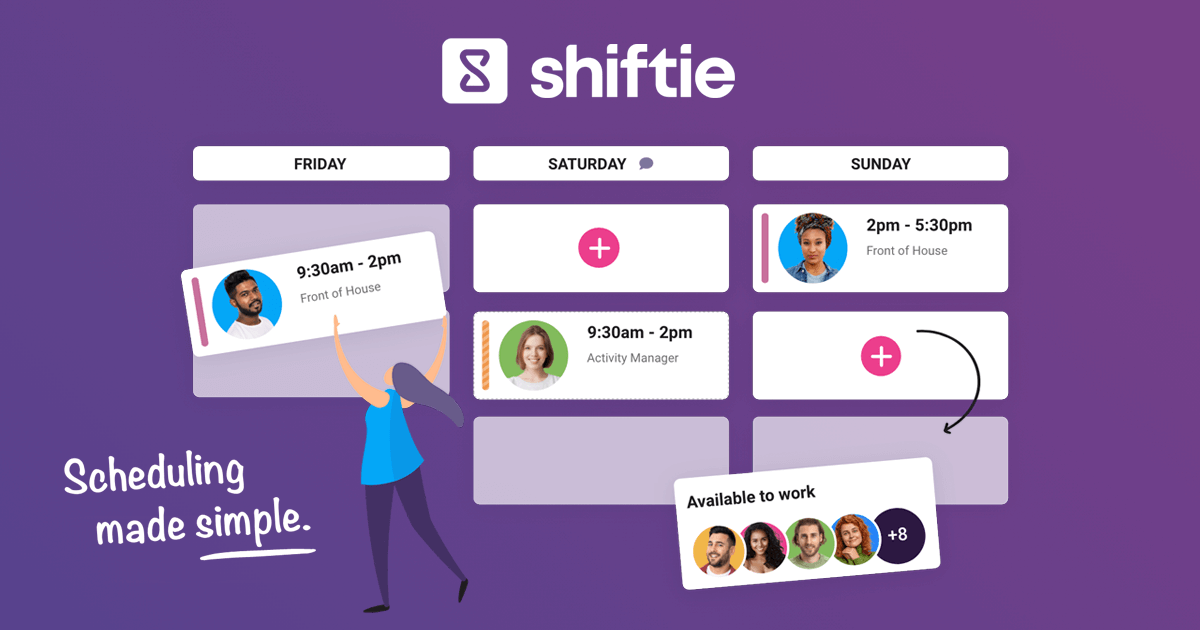
If you run a café, a visitor attraction or a mid-sized retail floor, the weekly rota is probably the single most annoying thing on your plate. Shiftie is a UK-built platform that tries to fix that, pairing drag-and-drop scheduling with a time clock, timesheets and light HR in one place.
The pitch is not that it does more than everyone else, it is that it does the shift-work basics cleanly and charges one flat rate for every feature.
So the real question is not whether Shiftie can build a rota, because most tools can.
It is whether the flat £2.75 per employee price and the 30-person billing floor add up for your team size, and whether its shorter integration list holds you back versus heavier names like Deputy or When I Work.
This review works through the product, the day-to-day experience, the honest pricing math, and where a competitor fits your situation better.
What is Shiftie?
Shiftie is a cloud-based staff scheduling and workforce management platform aimed squarely at shift-based businesses: hospitality (restaurants, cafés, bars, nightclubs), retail, visitor attractions, leisure centres, hotels and healthcare settings like dental practices.
It is a British product, and that shows in the details, from holiday-allowance handling to the language and the integration partners it picks.
At its core sit five things.
Scheduling is the headline: a drag-and-drop rota builder with shift templates, open shifts staff can claim, shift swaps, conflict detection and grouping by role or department across multiple venues. The time clock adds mobile and portal clock-in with GPS-based restrictions and an on-site overview of who is currently working.
Timesheets generate automatically from clocked hours, then flow through edit, review and approval before a payroll export. Leave and HR cover holiday allowances, absence tracking and a document store for policies and contracts.
Team messaging handles bulk and targeted announcements, and reporting tracks labour cost against target hours.
What Shiftie is not is a full HRIS or payroll engine. It schedules and tracks time, then hands clean data to your payroll system rather than running payroll itself. Think of it as the operational layer between your staff and your back office.
How Shiftie works
Getting started is genuinely quick because there is only one plan to pick and a 28-day trial with no card required. You add venues, create roles and departments, import staff, then build your first week.
The rota builder is where people spend most time, and it holds up: you drag shifts onto a grid, save common patterns as templates, and copy a week forward instead of rebuilding it.
Open shifts let you post uncovered slots that employees claim from their phones, and conflict detection flags double-bookings and availability clashes before you publish.
Day to day, staff live in the mobile app: they check rotas, set availability, request leave, swap shifts and clock in and out.
Managers get the on-site view of who is clocked in, approve timesheets, and export hours to payroll. The interface is clean and modern rather than dense, which shortens the learning curve for non-technical shift managers.
The honest rough edge is that the integration list is short, with ticketing and one POS but no native Xero, QuickBooks, Slack or the big payroll platforms, so payroll is an export rather than a direct sync. Deeper connections lean on the API, which means developer time.
Shiftie key features
Shiftie pricing
Shiftie keeps pricing about as simple as it gets: one plan, every feature, £2.75 per employee per month. There are no Starter, Pro or Enterprise tiers holding features hostage, so scheduling, time clock, timesheets, leave, documents, messaging, reporting and multi-venue all come as standard, backed by unlimited 7-day support.
A 28-day free trial runs with no card required.
The number to plan around is the minimum. Billing is calculated on at least 30 employees, so the floor is 30 x £2.75 = £82.50 per month even if you employ twelve people.
Above 30 you pay per active employee, charged at the start of each month based on who was marked active the month before, so quiet months bill fairly. Over 200 staff moves to custom pricing, and there is no advertised annual discount.
What you will really pay: a 15-person café pays the £82.50 floor, an effective £5.50 a head, while 60 staff costs £165.
The flat model rewards mid-sized and larger teams and penalises very small ones, so under roughly 30 staff a per-user rival with no floor can be cheaper.
| Plan | Price | Best for |
|---|---|---|
| Standard | £2.75/employee/mo, billed on a minimum of 30 employees (£82.50/mo floor) | All features included, no tiers |
| Enterprise | Custom quote | Teams of more than 200 employees |
Shiftie pros and cons
What we like
- One plan, every feature: no tiers gating scheduling, time clock, timesheets, leave, messaging or reporting.
- Genuinely simple to set up and use, with a modern interface non-technical managers pick up fast.
- Fair active-user billing and a real 28-day trial with no card, so seasonal months are not overcharged.
What could be better
- The 30-employee minimum (£82.50/mo floor) makes it expensive per head for teams under about 25.
- Short integration list: ticketing and one POS, but no native Xero, QuickBooks, Slack or major payroll sync.
- No built-in payroll and no advertised annual discount, so it is an operational layer, not a full HR suite.
Who Shiftie is for
Shiftie is a strong fit for UK shift-based businesses with roughly 30 to 200 staff across one or several sites: think a growing restaurant group, a visitor attraction, a leisure centre or a multi-store retailer.
If you want clean scheduling, honest time tracking and light HR without decoding a tiered price sheet, the flat model is easy to budget and quick to roll out to non-technical managers.
It is a weaker fit for very small teams under about 15 people, who will feel the £82.50 floor as a steep per-head cost, and for companies that need payroll run inside the tool or deep native links to Xero, QuickBooks, Slack or a specific payroll provider.
US-heavy operations that want a large app marketplace are better served by Deputy or When I Work. And if you are a micro café or single small store, Connecteam's free tier for up to 10 users, or a no-floor per-user tool like RotaCloud, will cost less while covering the same rota basics.
Best Shiftie alternatives
If Shiftie is not the right fit, these are the closest options.
| Tool | Best for | Starts at | |
|---|---|---|---|
| Shiftie | UK shift-based teams of ~30 to 200 across hospitality, retail, attractions and leisure that want flat, all-in pricing. | £2 | Visit → |
| Deputy | Larger and multi-site operations wanting a mature scheduling platform with a deep integration and payroll ecosystem. | Scheduling or Time & Attendance about $4 | Visit → |
| RotaCloud | Small to mid UK teams wanting straightforward rota software with no steep billing floor. | Priced per module (Scheduling, Time & Attendance, Leave/HR) from rough | Visit → |
| Planday | Hospitality and retail teams in the UK and Europe, especially existing Xero users. | Starter and Plus tiers, roughly £2 | Visit → |
| When I Work | Small and mid businesses wanting a polished, mobile-first scheduling app. | From about $2 | Visit → |
| Connecteam | Deskless and micro teams wanting scheduling plus comms and checklists in one free-to-start app. | Free for up to 10 users | Visit → |
The bottom line
Shiftie earns its place by doing the boring things well. For a UK shift business between about 30 and 200 staff, the flat £2.75 per employee model is honest and easy to budget, the rota and time-clock tools are clean, and the 28-day no-card trial lets you prove it before paying.
If simplicity and a predictable bill matter more than a sprawling app marketplace, it is an easy tool to recommend.
The decision really comes down to size and integrations. Under roughly 25 staff, the £82.50 floor makes it dear per head, and RotaCloud or Connecteam's free tier will cost less for the same basics.
If you need deep native payroll and POS links or you run large, multi-country operations, Deputy is the stronger platform, and When I Work is the better bet if a best-in-class mobile app tops your list. But for a straightforward UK operator who wants scheduling sorted without a pricing puzzle, Shiftie is a genuinely good pick.
Frequently asked questions
Get the HRpresso brief
Free daily newsletter, read in 5 minutes.
Subscribe free